A repeatable IP pipeline depends on having a reliable way to turn technical work into invention disclosures that can be evaluated and acted on. But an invention disclosure process only works when employees actually use it—and when someone consistently reviews what they submit.
For many companies, that process still depends on emailed documents, spreadsheets, long questionnaires, and repeated follow-ups with busy engineers. As the volume of potential inventions grows, informal systems become harder to manage, and promising ideas can stall before anyone reaches a filing decision.
Invention disclosure software gives inventors a structured way to submit technical ideas and gives legal or IP teams a consistent process for reviewing, prioritizing, and advancing them. We compared nine popular invention disclosure platforms for companies with growing IP needs.
What does invention disclosure software actually do?
Invention disclosure software gives employees a structured way to document a potential invention and gives the IP or legal team a consistent place to review it. The platform captures the technical context, supporting materials, and follow-up questions needed to decide whether the idea should move forward.
From there, reviewers can develop the disclosure, record a filing decision, and move approved inventions into the next stage of the patent process. Depending on the platform, that may mean sending the disclosure to outside counsel or advancing it directly into drafting and filing.
What features matter most in invention disclosure software?
Not every disclosure platform prioritizes the same things. Before comparing specific tools, it helps to know which capabilities separate the serious options from the ones that just digitize a paper form:
Structured intake forms are the foundation. The platform should guide inventors through a clear submission process—including problem, solution, and supporting materials—without requiring them to already understand patent terminology. The best forms are short enough to encourage participation but thorough enough to produce a reviewable record.
Workflow routing and approvals determine whether submissions actually get reviewed. Configurable stages with automated notifications keep disclosures from stalling in someone's inbox.
Collaboration tools let reviewers comment, request clarifications, and discuss an invention within the platform rather than through side-channel emails. This creates a traceable record of the evaluation process.
File and evidence handling matters because inventions rarely fit in a text box. Platforms need to accept diagrams, code snippets, presentations, white papers, and lab notebooks as supporting material.
Scoring and prioritization help IP teams rank inventions by novelty, business value, competitive relevance, or other criteria when the volume of submissions exceeds the budget for filings.
Integration with downstream filing workflows connects the disclosure process to whatever happens next, whether that's drafting a patent application, assigning outside counsel, or logging the decision in a docket management system.
Inventor visibility keeps submitters informed about the status of their disclosure, which directly affects whether they'll bother submitting the next one.
Quick comparison
| Platform | Primary category | Disclosure method | Invention-specific follow-up questions | Evaluation and prioritization | Drafting and filing included | Ongoing patent workflow | Best for |
|---|---|---|---|---|---|---|---|
| Patentext | Invention-to-patent platform | Conversational disclosure development | Yes | Yes | Yes, through USPTO-registered patent agents | Strategy through prosecution | Startups and growing companies that want an end-to-end patent experience |
| Triangle IP | Disclosure intake and workflow | Guided submission form | No | Scoring and committee review | No | Intake through filing decision | Smaller teams improving disclosure participation |
| Tradespace | Full-lifecycle AI IP platform | AI-assisted disclosure workflow | Limited | Yes | Yes | Broad enterprise IP lifecycle | Companies with established in-house IP teams |
| IPfolio | Corporate IP management | Configurable disclosure form | No | Workflow-based | No | Disclosure through portfolio management | Mid-size and large corporate IP teams |
| Anaqua | Enterprise IP management | Configurable disclosure form | No | Yes | No | Global IP lifecycle management | Large global IP departments |
| Wellspring | Technology-transfer platform | Guided disclosure form | No | Yes | No | Disclosure through licensing and compliance | Research institutions |
| AppColl | Disclosure workflow software | Online disclosure form | No | Committee workflow | No | Disclosure through filing approval | Corporate patent review committees |
| Minuet | Technology-transfer platform | Guided disclosure form | No | Yes | No | Disclosure through licensing and revenue tracking | Universities and research labs |
| Patlytics | Patent intelligence platform | AI-assisted disclosure workflow | Limited | Advanced patent analysis | Drafting tools; filing varies | Disclosure through intelligence and enforcement | Sophisticated IP teams |
1. Patentext
Primary category: Invention-to-patent platform
What it is
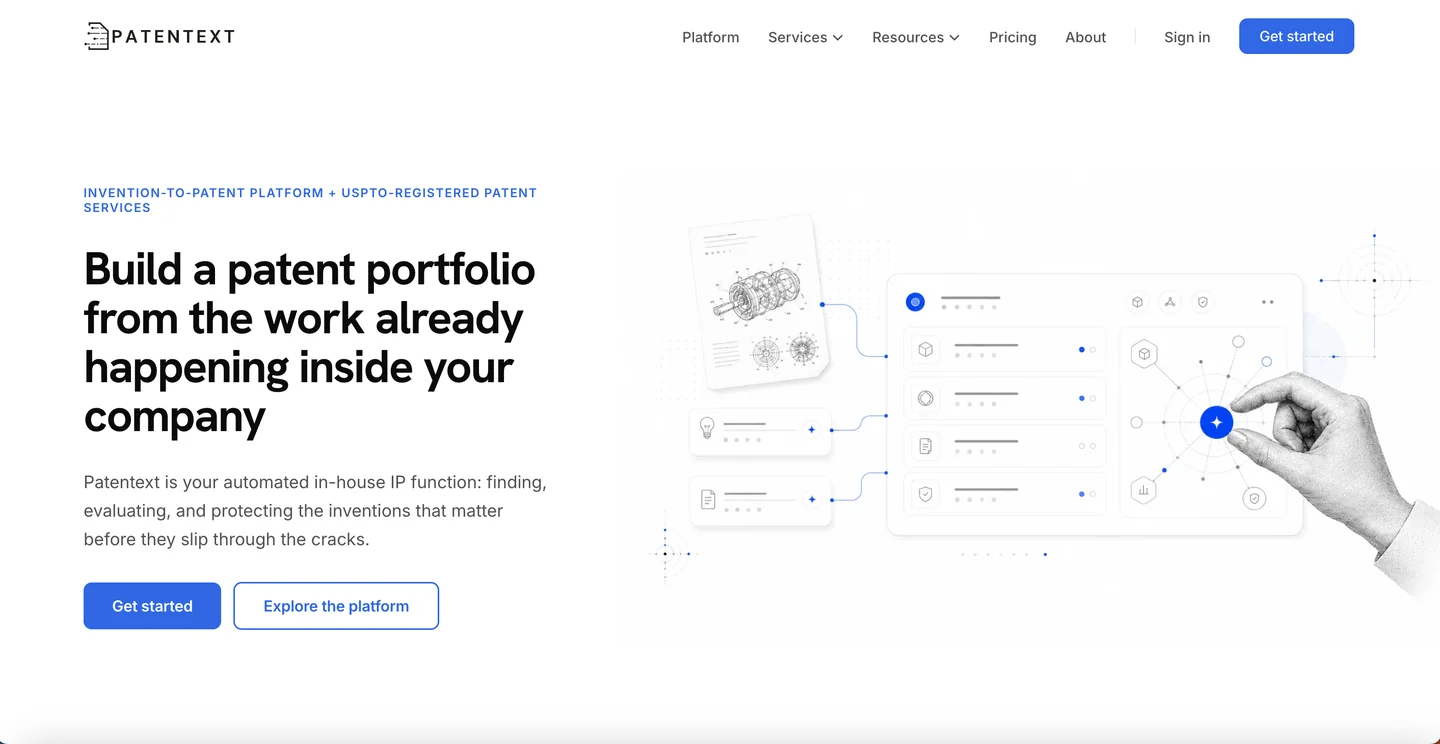
Patentext helps startups and growing technical companies turn internal innovation into a repeatable patent pipeline. The platform supports invention discovery, structured disclosure development, strategic evaluation, filing decisions, and application tracking, while Patentext Services provides professional drafting, filing, and prosecution.
How Patentext handles invention disclosure
Patentext uses guided workflows rather than asking inventors to complete a long, blank disclosure form. Technical teams can work through the invention in a structured way, capturing how it works, what makes it different, and which variations or implementations may matter. They can also upload supporting materials such as diagrams, screenshots, technical documents, and images to provide additional context.
The disclosure then becomes the foundation for the rest of the patent process. Teams can assess the opportunity against business priorities, disclosure timing, competitive relevance, and the broader patent strategy before deciding whether to proceed.
When an invention is approved for filing, the same record moves into application preparation through Patentext Services. The USPTO-registered patent agent receives the technical history and supporting context already developed in the platform, reducing the need to restart the process through meetings, emails, and disconnected intake documents.
Pros
- Connects invention disclosure to the broader patent process, including strategy, evaluation, filing decisions, drafting, filing, and prosecution.
- Gives technical teams a guided, asynchronous way to develop disclosures without lengthy forms or required meetings.
- Preserves technical and business context from the initial disclosure through application drafting.
- Applications are prepared and reviewed by USPTO-registered patent agents through Patentext Services.
- Supports fast turnaround when a company needs to move quickly before a launch, publication, or other public disclosure.
- Published flat-fee application pricing makes future patent spending easier to plan.
Cons
- Patentext is not a full enterprise docketing system for large global portfolios with complex jurisdictional requirements.
- Companies that already have a mature internal IP department and established enterprise systems may not need the broader guided workflow.
- Patentext is newer than several legacy IP-management platforms.
Pricing
- Free patent strategy and invention disclosure tools
- Discovery plan: $2,700/year for unlimited strategy sessions and disclosures
- Provisional patent application (through Patentext Services): $3,600
- Nonprovisional patent application (through Patentext Services): $5,700
Best for
Startups and growing technical companies that want an ongoing patent function—help identifying and developing inventions, deciding what to protect, and moving approved opportunities into professionally prepared patent applications without hiring a full in-house patent team.
2. Triangle IP (TIP Tool)
Primary category: Disclosure intake and workflow
What it is
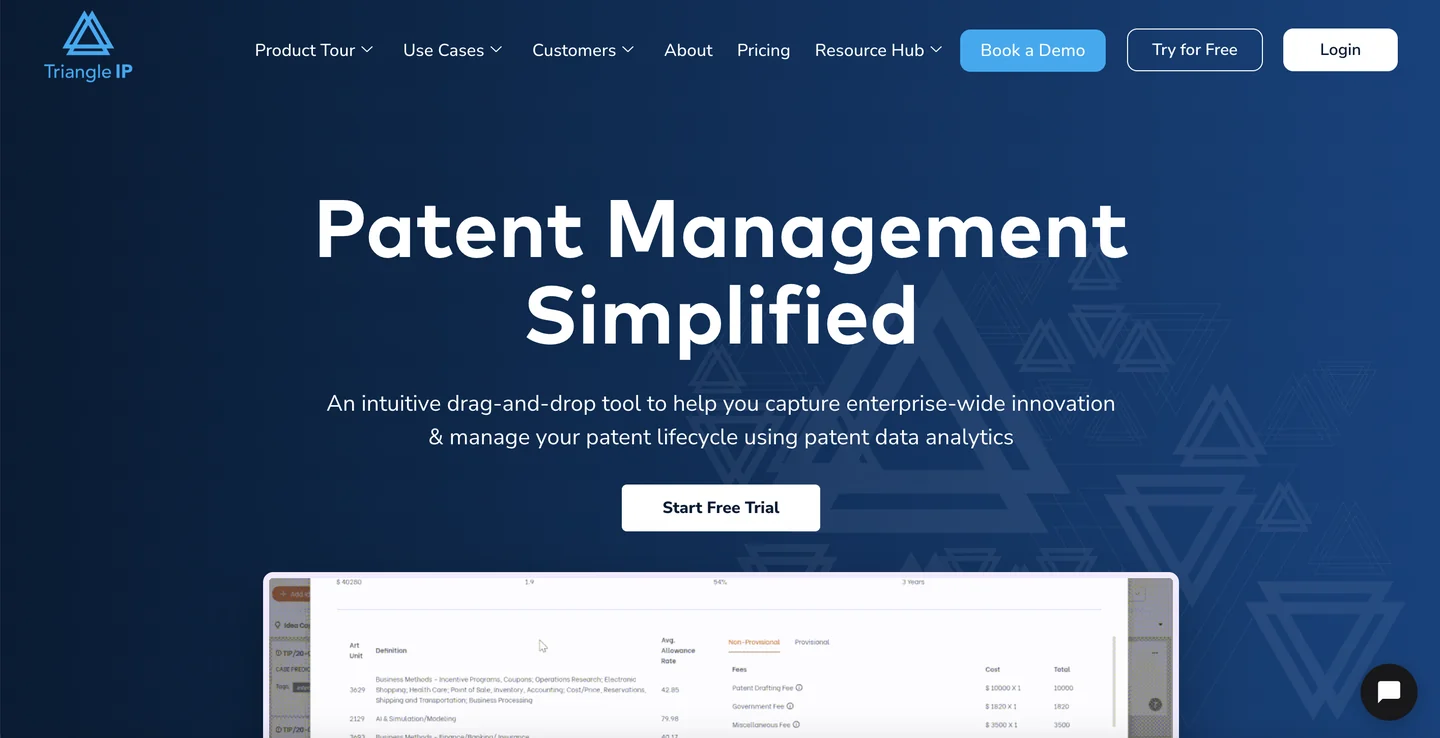
Triangle IP's TIP Tool is a cloud-based patent workflow platform focused on idea capture and internal review. Its drag-and-drop interface lets IP teams move inventions from initial submission through evaluation and filing decisions.
The disclosure process starts with a deliberately simple form. Only the invention title and inventor's email are required, with an optional summary that prompts the inventor to explain the problem, solution, and benefits. Patent committees can then score ideas, collaborate on submissions, and control access based on each user's role.
Pros
- Simple intake process lowers the barrier for employees submitting ideas.
- Kanban-style interface makes the pipeline easy to understand and manage.
- Scoring and review tools support patent committee decisions.
- USPTO status syncing adds visibility after an application is filed.
- Free and flat-rate plans make it accessible to smaller teams.
Cons
- Relies on employees recognizing an invention and choosing to submit it.
- Focuses more on intake and workflow than on developing a detailed technical disclosure.
- Does not include professional patent drafting or filing services.
- Prior-art analysis and strategic evaluation are more limited than on broader AI or enterprise platforms.
Pricing
- Free plan: $0 for up to 10 users
- Premium plan: $50 per month or $500 per year for up to 100 users
- Custom enterprise plans available
Best for
Small and mid-size companies that want a simple invention-submission process and a visual pipeline for reviewing ideas without adopting a full enterprise IP-management system.
3. Tradespace
Primary category: Full-lifecycle AI IP platform
What it is
Tradespace is an AI-powered IP management platform that spans invention harvesting, disclosure development, patent drafting, filing, and portfolio management. It is primarily built for companies with established IP teams that want to manage more of the patent lifecycle in one system.
Inventors can upload existing materials instead of completing a blank disclosure form. Tradespace uses those materials to build a structured disclosure, flag missing information, and add prior-art and market context.
Pros
- Builds disclosures from technical materials that already exist.
- Adds prior-art and market context to support filing decisions.
- Connects disclosure management to drafting and broader portfolio workflows.
- Well suited to established IP teams consolidating multiple tools.
Cons
- May be more than what companies need if their main problem is disclosure intake.
- Works best when an internal IP team is available to review results and manage the workflow.
Pricing
Platform pricing is not published and requires a custom quote. Tradespace separately advertises startup filing services, so buyers should confirm which software capabilities are included with those services.
Best for
Mid-size and large companies with established IP teams that want invention harvesting and disclosure management inside a broader patent-operations platform.
4. IPfolio
Primary category: Corporate IP management
What it is
IPfolio is a cloud-based IP management platform for in-house teams managing invention intake alongside a broader patent portfolio. Its configurable inventor portal supports structured disclosure forms, internal review, and filing decisions within the same system used for portfolio tracking and reporting.
Teams can tailor forms and workflows by business unit or technology area, route submissions to the right reviewers, and track each disclosure through approval. Comments, follow-up requests, and decision history remain attached to the record, while dashboards give IP leaders visibility into submission volume and review progress.
Pros
- Highly configurable forms and approval workflows.
- Strong audit trails and role-based access controls.
- Connects disclosures to broader portfolio and docketing records.
- Useful reporting for internal governance and outside counsel management.
- Well suited to companies with established IP operations.
Cons
- Disclosure management is one module within a much broader platform.
- May be too complex for teams that only need a better intake process.
- Requires more setup and configuration than lighter disclosure tools.
- Best suited to organizations with dedicated staff to manage the system.
Pricing
IPfolio starts at approximately $20,000 per company per year, according to its Salesforce AppExchange listing. Final pricing depends on the modules, implementation scope, and organizational requirements.
Best for
Large corporations with in-house IP teams that need invention disclosures integrated with portfolio management, docketing, and internal governance.
5. Anaqua
Primary category: Enterprise IP management
What it is
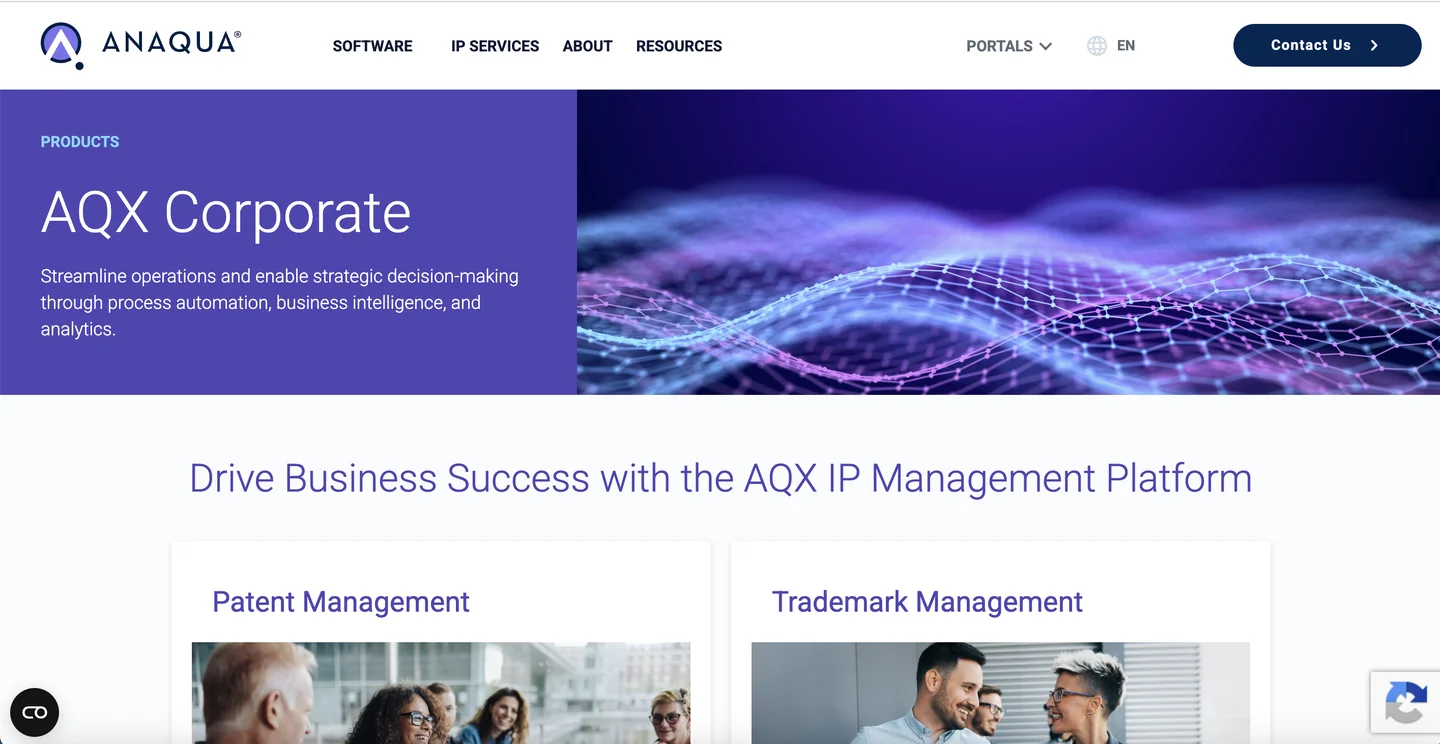
Anaqua is an established enterprise IP management provider serving large corporate patent filers and law firms. Its AQX platform for corporations and PATTSY WAVE platform for law firms both include invention disclosure management within a broader system for docketing, prosecution, and portfolio administration.
Inventors can submit disclosures through configurable questionnaires, while approval workflows route each submission based on factors such as business unit, technology area, or geography. Anaqua also supports inventor incentives, role-based dashboards, and links between disclosure records and the resulting patent families.
Pros
- Built to manage high disclosure volumes across large, global organizations.
- Highly configurable forms, workflows, permissions, and reporting.
- Connects invention disclosures to docketing, prosecution, and portfolio records.
- Supports inventor award and remuneration programs.
- Proven in complex enterprise IP environments.
Cons
- Requires substantially more implementation and administration than a focused disclosure tool.
- May be difficult for occasional users or smaller teams to navigate.
- Best suited to organizations with dedicated IP operations staff.
Pricing
Custom enterprise pricing based on portfolio size, user count, modules, integrations, and implementation scope.
Best for
Large corporations and law firms with mature global IP operations that need invention disclosure management integrated with enterprise docketing, prosecution, and portfolio administration.
6. Wellspring
Primary category: Technology-transfer management
What it is
Wellspring's Sophia platform is built for universities, research institutions, federal labs, and corporate R&D organizations managing invention disclosures alongside licensing, compliance, contracts, and broader technology-transfer work.
Researchers can submit disclosures using existing institutional credentials, while configurable forms and approval workflows move each submission into a formal invention record. The platform also supports status tracking, role-based access, and links between disclosure records and downstream docketing or licensing activity.
Pros
- Designed specifically for university and research-based technology-transfer programs.
- Connects invention disclosures with licensing, contracts, compliance, and docketing.
- Supports institution-specific workflows, including Bayh-Dole reporting and inventor remuneration.
- Modular structure lets institutions add capabilities as their program expands.
Cons
- Workflows and terminology are tailored to research institutions rather than commercial startups.
- May include substantial functionality that a company focused only on patent intake would not use.
- The interface may feel less modern than newer disclosure platforms.
Pricing
Custom pricing based on the institution, selected modules, users, and implementation scope.
Best for
Universities, research institutions, federal labs, and corporate R&D organizations that need invention disclosure management connected to compliance, licensing, contracts, and other technology-transfer workflows.
7. AppColl Invention Manager
Primary category: Disclosure intake and approval workflow
What it is
AppColl Invention Manager is a dedicated disclosure-management system for corporations and patent review committees. It is separate from AppColl's Prosecution Manager and focuses on moving inventions from submission through internal review and filing approval.
Teams can create multi-stage approval workflows, assign reviewers, and track each disclosure from a central dashboard. Committees can combine related ideas, request changes, reassign actions, and maintain supporting documents with version history.
Pros
- Purpose-built for the disclosure-to-filing-decision workflow.
- Flexible approval stages can mirror an existing patent committee process.
- Central dashboard makes statuses, next steps, and reviewer assignments easy to track.
- Supports detailed permissions, document storage, and version history.
- Can be adopted without purchasing AppColl's broader prosecution platform.
Cons
- Does not help inventors develop disclosures with AI-assisted guidance.
- Does not include prior-art analysis or automated evaluation.
- Independent reviews of the Invention Manager product are limited.
- Connections to systems outside the AppColl ecosystem may require additional setup.
Pricing
AppColl Invention Manager costs $350 per month for up to 100 users, billed annually.
Best for
Corporations with established patent review committees that need a focused system for routing, reviewing, and approving invention disclosures without adopting a full enterprise IP-management platform.
8. Minuet (by Inteum)
Primary category: Technology-transfer management
What it is
Minuet is an IP and technology-transfer management platform built for universities, research hospitals, federal labs, and similar institutions. It supports invention disclosures alongside patent management, agreements, licensing, compliance, and financial tracking.
Its Inventor Portal lets researchers submit and sign disclosures through configurable forms that feed directly into the main system. Minuet also supports DocuSign, iEdison reporting, automated alerts, extensive reporting, and AI-assisted document summaries.

Pros
- Deeply tailored to technology-transfer offices and research institutions.
- Highly configurable forms, fields, notifications, and workflows.
- Strong support for Bayh-Dole compliance and iEdison reporting.
- Connects disclosures with licensing, agreements, financials, and revenue distribution.
- Broad integration options, including DocuSign, Salesforce, Workday, and Outlook.
Cons
- Much of the platform is irrelevant for commercial startups and smaller corporate teams.
- The interface may feel less modern than newer platforms.
- AI features are supporting additions rather than the core of the product.
- Implementation and configuration may require significant internal planning.
Pricing
Minuet uses custom annual pricing.
Best for
Technology-transfer offices that need invention disclosures connected to compliance, licensing, agreements, reporting, and revenue distribution in one configurable platform.
9. Patlytics
Primary category: Patent intelligence with disclosure features
What it is
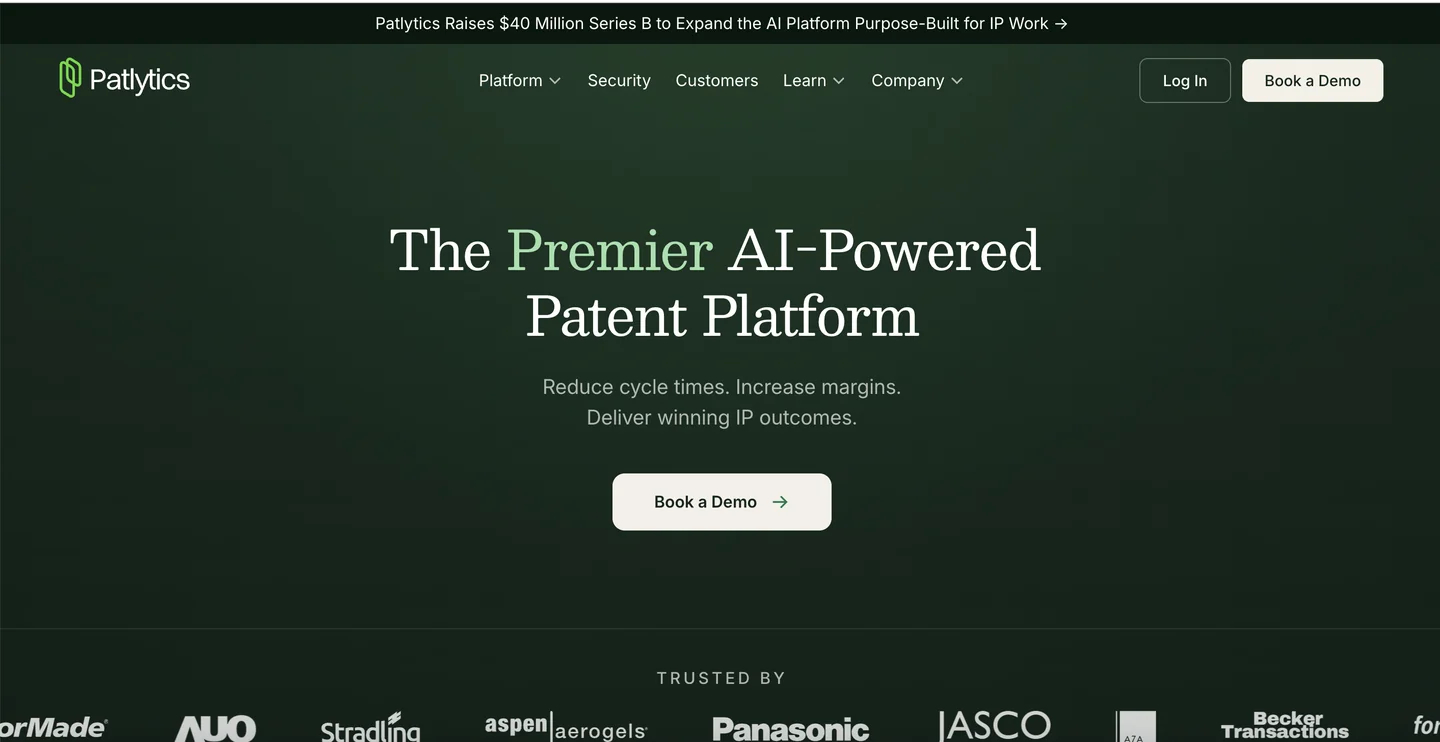
Patlytics is an AI-powered patent intelligence platform that includes invention disclosure tools alongside prior-art research, claim analysis, portfolio management, infringement detection, and litigation support.
Its disclosure workflow can turn inventor materials such as technical figures, images, and presentations into more structured records. Patlytics can also compare submissions, identify possible duplicates, and connect disclosure review with prior-art and patentability analysis.
Pros
- Connects invention disclosures to broader patent intelligence and enforcement workflows.
- Strong prior-art, claim-analysis, and competitive-intelligence capabilities.
- Can help consolidate overlapping submissions in high-volume programs.
- Useful for teams that want to evaluate inventions with future licensing or enforcement in mind.
Cons
- Disclosure management is one part of a much broader patent-intelligence platform—likely more complex than necessary for teams that only need intake and approval workflows.
- Best suited to experienced patent professionals rather than occasional business users.
- Newer disclosure features may be less mature than the platform's core analysis tools.
Pricing
Patlytics does not publish standard pricing. Third-party estimates place subscriptions at roughly $800 to $3,600 per user per month.
Best for
Corporate IP departments and law firms that want invention disclosures connected to prior-art research, claim analysis, enforcement, and broader portfolio intelligence.
How to choose the right invention disclosure platform
The best invention disclosure platform is not necessarily the one with the most features. Many products in this category were built for global IP departments, law firms, or university technology-transfer offices. For a growing company, that level of complexity can create more work than it removes.
Do employees need an easier way to submit inventions?
If potentially valuable ideas are being lost because the disclosure form is too long or confusing, prioritize the inventor experience.
Triangle IP offers a simple submission form and a visual review pipeline. Tradespace goes further by using existing technical materials to help assemble disclosures. Patentext uses a guided, asynchronous process that helps technical teams develop the invention without requiring them to complete a traditional legal-style questionnaire or attend repeated intake meetings.
Do you need help deciding which inventions to pursue?
Capturing more disclosures is only useful if the company can evaluate them and make filing decisions. Look for a platform that helps reviewers understand the technical distinction, business relevance, timing, and fit with the company's broader patent strategy.
Patentext is particularly well suited to companies that need this guidance because it connects disclosure development with strategy and filing decisions, rather than assuming an experienced internal IP team will operate the process.
Enterprise systems such as Anaqua and IPfolio offer more configurable committee workflows and reporting, but much of that infrastructure may be unnecessary for companies with a smaller patent pipeline.
What should happen after a disclosure is approved?
Many disclosure platforms stop at the filing decision. The company must then export the record, find outside counsel, repeat the technical intake process, and manage the application separately.
Patentext keeps the disclosure connected to the next stage. Once the company approves an invention, USPTO-registered patent agents through Patentext Servicesuse the technical and business context already captured in the platform to prepare and file the application.
Tradespace also connects disclosures with downstream drafting and filing, but its broader enterprise platform is generally oriented toward companies with established IP operations. AppColl and Triangle IP focus more narrowly on internal intake and approval, so professional drafting and filing require a separate provider.
Do you already have a mature IP department?
Large global IP teams may need detailed permissions, audit trails, jurisdictional docketing, custom reporting, and integrations with existing enterprise systems. Anaqua, IPfolio, and Patlytics are built for that level of operational complexity.
For a startup or growing technical company, those platforms can be overkill. They often require meaningful implementation, dedicated administrators, and internal patent expertise to configure and use effectively.
Patentext is designed for companies that need the function without building the department. It provides a simpler path from invention disclosure through filing while preserving the option to manage multiple inventions as the company's portfolio grows.
Are you managing university or research-institution workflows?
Wellspring and Minuet are purpose-built for technology-transfer offices. They support requirements such as Bayh-Dole reporting, inventor remuneration, licensing, and revenue distribution.
Those capabilities are valuable for universities, federal labs, and research hospitals, but most commercial companies will not need them.
How much process does your team actually need?
A lightweight workflow may be sufficient if the company already knows what it wants to patent and has established filing counsel. A broad enterprise platform may make sense if hundreds of disclosures move through formal committees each year.
Patentext occupies the middle ground: more strategic and connected than a basic intake tool, but substantially less complex than an enterprise IP-management system. It is best suited to companies that want an ongoing process for developing inventions, deciding what to protect, and moving approved opportunities into professionally prepared patent applications.
Disclaimer: This article is for informational purposes only and does not constitute legal advice. Patent laws are complex and vary by jurisdiction. For personalized guidance, consult a qualified patent attorney or agent.