Invention-to-patent platform
One platform for the full patent workflow
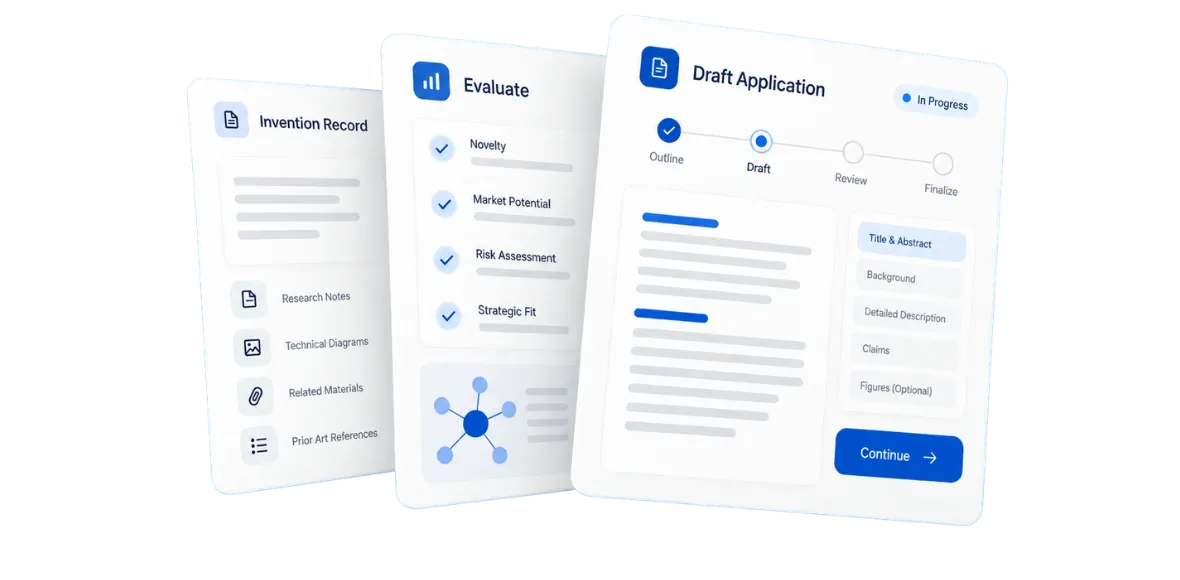
Patentext helps technical teams identify patentable work, capture invention context, evaluate what is worth protecting, and manage the path from disclosure to filing.
Patentext helps technical teams identify patentable work, capture invention context, evaluate what is worth protecting, and manage the path from disclosure to filing.
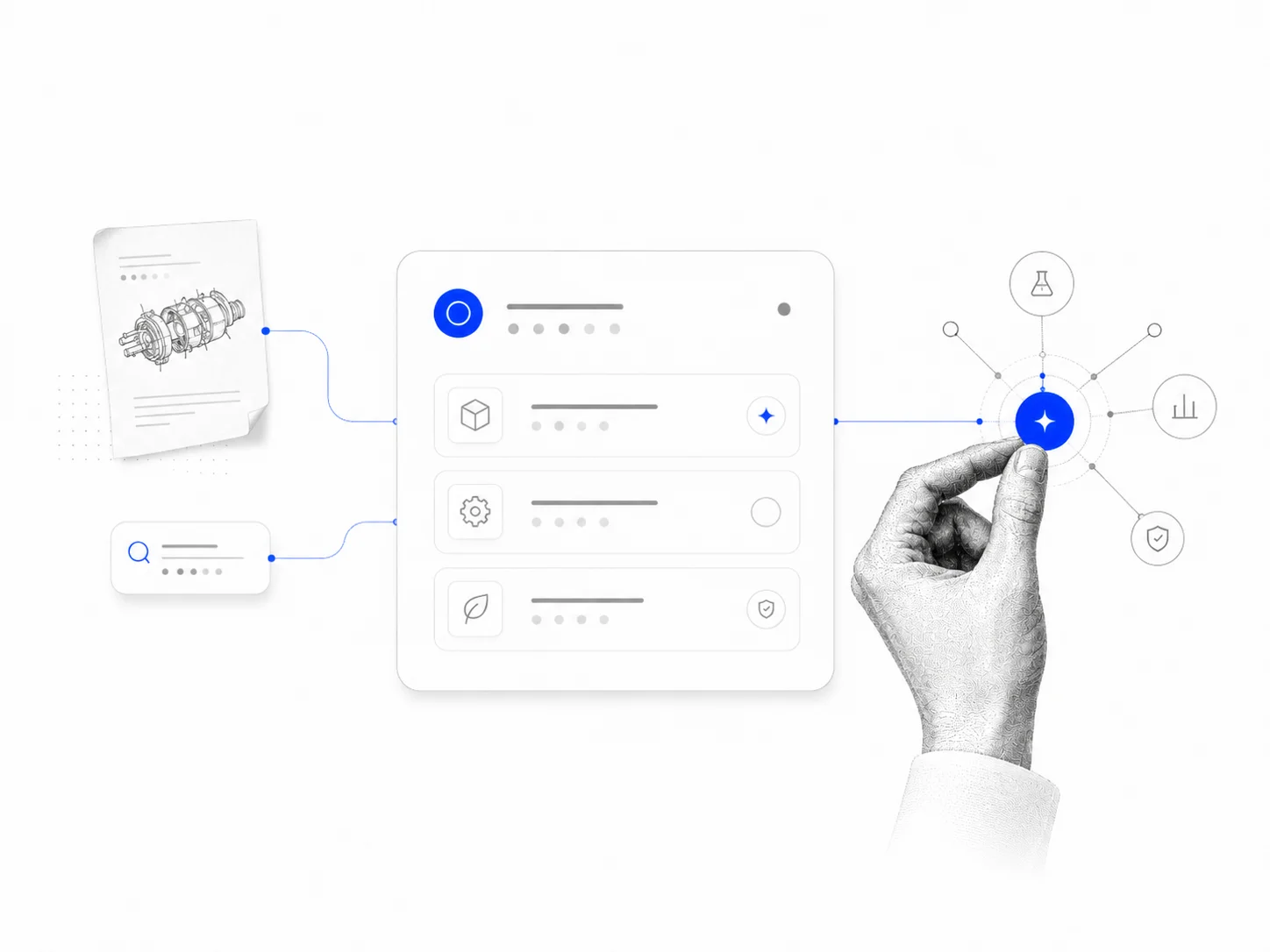
Patentext is built on a patent-pending invention graph designed specifically for patent work. It structures each invention as a connected system that links the technical problem, novel solution, implementation details, alternative embodiments, prior art context, claim concepts, business relevance, and filing decisions in one place.
That means the full invention story stays intact across capture, evaluation, drafting, and portfolio management.
Patentext helps teams identify invention signals across technical work and team knowledge, then move promising ideas into a structured review pipeline.
Patentext replaces blank disclosure forms with a guided capture flow that helps inventors provide the context patent professionals actually need.
Instead of treating every disclosure the same way, teams can make clearer filing decisions by evaluating inventions on novelty, product relevance, competitive importance, business value, and portfolio fit.
When you're ready to file, Patentext Services can prepare provisional applications for $3,600 and non-provisional applications from $5,700. Because drafting draws the same invention record, we can turn around drafts in days instead of weeks.
Patentext gives teams a single place to track invention activity, review status, drafting progress, filing decisions, and portfolio priorities.
Patentext is designed for the sensitivity of early-stage technical work, invention disclosures, and patent strategy.
SOC 2 Type I & II and ISO/IEC 27001:2022 certified, and built to align with GDPR and CCPA from the ground up.
We never use your uploads, drafts, or outputs to train AI models. Your invention disclosures are never shared or repurposed.
We maintain strict Zero Data Retention policies with all model providers. No inputs, outputs, or metadata are stored or reviewed by third parties.
All data is encrypted in transit using TLS 1.3 and at rest with block-level AES-XTS encryption.
Bring invention capture, evaluation, drafting, and patent services into one connected workflow.
Schedule a demo